


Page 27 - index
P. 27
TOP COVER 524+0)

                                                                                                       ('#674'


       QPMJDJOH!                            #.+56#+4 41'  # 5'48+0) 21.+%' %*+'( +052'%614


                                            9+6* .'+%'56'45*+4' 21.+%' &'5%4+$'5 *+5 4'%'06

               JO!UIF!                      ':2'4+'0%' 1( 914-+0) +0 6*' $#.-#05


                                            $#%-)4170&
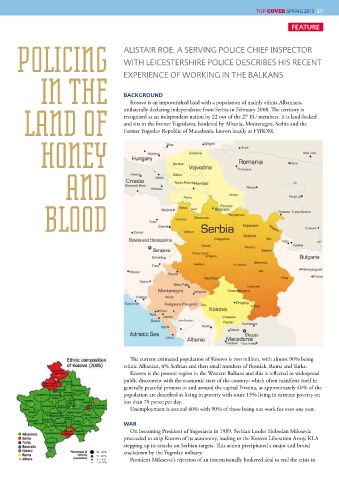
                                               Kosovo is an impoverished land with a population of mainly ethnic Albanians,
         MBOE!PG!                           unilaterally declaring independence from Serbia in February 2008. T e territory is
                                            recognised as an independent nation by 22 out of the 27 EU members. It is land-locked
                                            and sits in the former Yugoslavia, bordered by Albania, Montenegro, Serbia and the
                                            Former Yugoslav Republic of Macedonia, known locally as FYROM.
               IPOFZ!


                        BOE!


                 CMPPE


                                               T e current estimated population of Kosovo is two million, with almost 90% being
                                            ethnic Albanian, 6% Serbian and then small numbers of Bosniak, Roma and Turks.
                                               Kosovo is the poorest region in the Western Balkans and this is reflected in widespread
                                            public discontent with the economic state of the country; which often manifests itself in
                                            generally peaceful protests in and around the capital Pristina, as approximately 40% of the
                                            population are described as living in poverty with some 15% living in extreme poverty on
                                            less than 75 pence per day.
                                               Unemployment is around 40% with 90% of those being out work for over one year.

                                            9#4
                                               On becoming President of Yugoslavia in 1989, Serbian Leader Slobodan Milosevic
                                            proceeded to strip Kosovo of its autonomy, leading to the Kosovo Liberation Army, KLA
                                            stepping up its attacks on Serbian targets. T is action precipitated a major and brutal
                                            crackdown by the Yugoslav military.
                                               President Milosevic’s rejection of an internationally brokered deal to end the crisis in

