


Page 46 - index
P. 46
TOP COVER 524+0)

        *'#.6*   (+60'55

                                                 NIGHT SHIFT?


                                                  Shift yourself to


                                                            a healthy diet


                                            T e sleep/wake cycle is controlled by circadian rhythms, biological pulses of hormones
                                            regulated by pacemakers of the nucleus of the hypothalamus (James et al, 2007).
                                            Hormones peak and fall in order to regulate body temperature, respiration rate, heart rate,
                                            blood pressure, hormone production and gastrointestinal function (Harrington, 2001).
                                               A key hormone is melatonin, which peaks later in the day due to dim light conditions,
                                            referred to as ‘dim light melatonin onset’ or DLMO (Pandi-Perumal, 2007). Melatonin
                                            induces the reduction of activity, alertness and digestion to enable sleep and rest (Schnurr,
                                            2005). In comparison, during daylight hours melatonin is almost completely undetectable.
                                               Re-orientation of the sleep/wake cycle due to night shifts can lead to serious side effects
                                            of fatigue, irritability, anxiety, depression, obesity, increased cholesterol and cardiovascular
                                            problems such as stroke and heart attacks. A major study published by the British
                                            Medical Journal systematically reviewed 34 studies with over two million participants and
                                            concluded shift work is associated with an increased risk of cardiovascular problems (23%)
                                            and stroke (5%). Night shifts were associated with the steepest rise in coronary events
      +0 /#0; 9#;5                          (41%). However, shiftwork was not associated with increased mortality (Vyas et al, 2012).
                                               T ese serious cardiovascular conditions mentioned above may be associated with weight
      914-+0) # 0+)*6                       gain and obesity. Due to fatigue, those on night shifts may have an increased tendency
                                            to opt for sugary foods in the form of snacks, which provide a burst of energy but lead to
      5*+(6 +5 914-+0)                      increased fatigue later in the shift (Schnurr, 2005). Over time, these high sugar snacks will
                                            contribute to weight gain and obesity. Furthermore, due to night food consumption and
      #)#+056 ;174                          reduced digestion (due to the fall in hormones stimulating gut function) gastrointestinal

                                            problems such as heart burn, abdominal pain, flatulence, constipation and diarrhoea are
      ±014/#.² (70%6+10+0)                  common (Harrington, 2001).
      5+0%'  $+1.1)+%#..;                      T ere are however some silver linings to the problems discussed since eating the right
                                            foods at specific times can reduce the feelings of fatigue and grogginess and increase your
      9' #4' 241)4#//'&                     energy, alertness and overall mood.
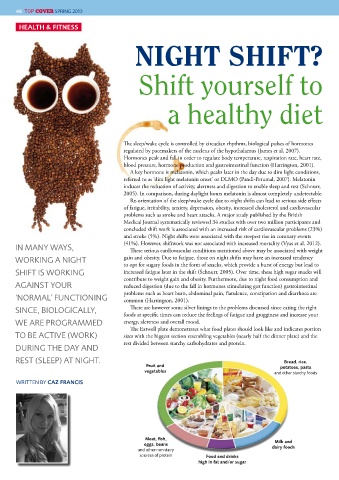
                                               T e Eatwell plate demonstrates what food plates should look like and indicates portion
      61 $' #%6+8'  914-                    sizes with the biggest section resembling vegetables (nearly half the dinner plate) and the
                                            rest divided between starchy carbohydrates and protein.
      &74+0) 6*' &#; #0&

      4'56  5.''2  #6 0+)*6                                                                          $TGCF  TKEG
                                                    (TWKV CPF                                      RQVCVQGU  RCUVC
                                                    XGIGVCDNGU                                   CPF QVJGT UVCTEJ[ HQQFU
       94+66'0 $; %#< (4#0%+5


                                                    /GCV  »UJ
                                                    GIIU  DGCPU                                   /KNM CPF
                                                  CPF QVJGT PQP FCKT[                            FCKT[ HQQFU
                                                  UQWTEGU QH RTQVGKP     (QQF CPF FTKPMU
                                                                       JKIJ KP HCV CPF QT UWICT

